Eric D. Schabell: Decision Manager
Showing posts with label Decision Manager. Show all posts

Friday, March 3, 2023

The Ultimate Beginners Guide to Rules and Processes

As seen online at KieLive episode #14
There are so many ways and so much content out there to get you started with open source rules and process automation tooling by Red Hat, so where do you start? 

The goal of this guide is to provide you with a learning path through this content as a way to get started from download, to installation, to quick starts, to hands-on workshops, and all the way to using this technology for your cloud-native development projects.

You'll walk away from this guide with a learning path mapped out through content that's enjoyable to work with and can help you get started on your rules and process automation projects today.

Wednesday, February 2, 2022

Intelligent data as a service (iDaaS) - Example data insights

intelligent data as a service
Part 4 - Example HL7 & FHIR integration

In our previous article from this series we talked about the example iDaaS data architecture specifically integration for HL7 and FHIR healthcare standards.

The process was laid out how we approached the use case and how portfolio solutions are the base for researching a generic architecture. It continued by laying out the process of how we approached the use case by researching successful customer portfolio solutions as the basis for a generic architecture.

Having completed our exploration of an HL7 and FHIR integration architecture, we'll walk you through a more specific example. This scenario is showing a proven and scalable architecture for integrating data insights into your healthcare solutions.

Tuesday, January 25, 2022

Intelligent data as a service (iDaaS) - Example HL7 and FHIR integration

intelligent data as a service
Part 4 - Example HL7 & FHIR integration

In our previous article from this series we talked about the example iDaaS data architecture which outlines at a higher abstraction level the solution for any healthcare organisation.

The process was laid out how we approached the use case and how portfolio solutions are the base for researching a generic architecture. It continued by laying out the process of how we approached the use case by researching successful customer portfolio solutions as the basis for a generic architecture.

Having completed our discussions on the example data integration architecture, we'll walk you through a more specific example. This scenario is showing a proven and scalable architecture for integrating HL7 and FHIR solutions into your healthcare organisation.

Wednesday, January 19, 2022

Intelligent data as a service (iDaaS) - Example data architecture

intelligent data as a service
Part 3 - Example data architecture

In our previous article from this series we talked about the logical common architectural elements found in an intelligent data as a service (iDaaS) solution for the healthcare industry.

The process was laid out how we approached the use case and how portfolio solutions are the base for researching a generic architecture. It continued by laying out the process of how we approached the use case by researching successful customer portfolio solutions as the basis for a generic architecture.

Having completed our discussions on the common architectural elements, it's now time to look at a specific example. This article walks you through an example data integration scenario showing how expanding the previously discussed elements provides an example for healthcare data integration scenarios.

Wednesday, January 12, 2022

Intelligent data as a service (iDaaS) - Common architectural elements

intelligent data as a service
Part 2 - Common architectural elements

In the previous article from this series we introduced an architecture around intelligent data as a service (iDaaS) for the healthcare industry.

The process was laid out how we approached the use case and how portfolio solutions are the base for researching a generic architecture. 

The only thing left to cover was the order in which you'll be led through the details.

This article starts the real journey at the very top, with a generic architecture from which we'll discuss the common architectural elements one by one.

Monday, January 10, 2022

CodeReady Containers - Beginners guide to OpenShift Container Platform 4.9.10 with business automation tooling

code ready containers
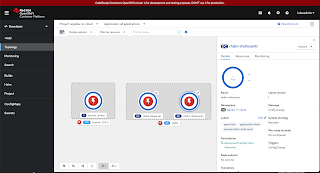
Some time ago, back in December of 2020, I shared with you how to get started with business automation tooling on your developer machine using CodeReady Containers. 

In this four part series you were familiarised with the OpenShift Container Platform, the business automation operators, and given a project to install the developer tooling needed to begin designing processes, rules, and much more.

Recently, there were updates to the CodeReady Containers offering that gives you the latest OpenShift Container Platform 4.9.10 to run quite easily on your local developer machine.

Time to update the various projects for leveraging to learn business automation tooling better known as the Red Hat Process Automation Manager and Red Hat Decision Manager. Along with these installation projects, you'll be able to use the free online workshops with the latests tooling.

Friday, December 31, 2021

2021 year in review - The new normal?

The year 2021 is coming to a close, ending pretty much the same way here in the Netherlands as it started in 2020... a lockdown.

Empty streets, closed shops, closed restaurants, no parties, no gatherings, and all just when we thought it might be getting back to normal.

Not yet.

Meanwhile work has gone one and life has continued for me with little change other than the occasional possibility to get out and about to visit you.

Just like in 2020, we've shared more time together this year online in virtual events, coffee breaks, and other strange virtual events. On the up side there were the possibilities to travel again in 2021 and I got to spend time with my family back in the US for the first time in over three years!

It was my +12th year at Red Hat and the worldwide pandemic continued to influence our daily lives as it surged and subsided throughout the year. While it's a constant in all the planning and activities, let's review some of the activities from 2021 that were not affected by the pandemic.


Tuesday, December 21, 2021

Intelligent data as a service (iDaaS) - Architectural introduction

intelligent data as a service
Part 1 - Architectural introduction
The last few months we have been digging deeply into the world of healthcare architectures with a focus on presenting access to ways of mapping successful implementations for specific use cases.

It's an interesting challenge in that we have the mission of creating architectural content based on common customer adoption patterns. 

That's very different from most of the traditional marketing activities usually associated with generating content for the sole purpose of positioning products for solutions. When you're basing the content on actual execution in solution delivery, you're cutting out the chuff. 

What's that mean?

It means that it's going to provide you with a way to implement a solution using open source technologies by focusing on the integrations, structures and interactions that actually have been proven to work. What's not included are any vendor promises that you'll find in normal marketing content. Those promised that when it gets down to implementation crunch time, might not fully deliver on their promises.

Enter the term Portfolio Architecture. 

Let's look at these architectures, how they're created and what value they provide for your solution designs.

Thursday, November 11, 2021

Red Hat Summit Connect and Partner Experience Dublin - Talking Architecture Shop (slides)

talking architecture shopThe Red Hat Summit Connect Partner Experience and Red Hat Summit Connect events for customers were held this week in Dublin. Each was a one day event,  part of a new series of small-scale events, that brings the discussion of open source technology to your local cities.

The days were intended to bring updates and insights into the latest technologies and also offered the opportunity to get hands on with a few Red Hat technologies.  There were different streams of session topics hosting tech talks led by Red Hat experts and also business focused sessions delivered from local industry leaders including some fantastic partner and customer stories.

I was invited to give a session at both events in Dublin this week and wanted to share the slides presented that included links to all of the available content we discussed. 

Monday, November 8, 2021

Red Hat Summit Connect Partner Experience Dublin - Exploring Open Source Success at Scale

red hat

The Red Hat Summit Connect Partner Experience Dublin is a one day event,  part of a new series of small-scale events, that brings the discussion of open source technology to your local cities.

 The day provides updates and insights into the latest technologies and will also offer the opportunity to get hands on with Red Hat technologies.  There will be different streams of session topics that will host tech talks led by Red Hat experts and also business focused sessions delivered from industry leaders including some fantastic partner and customer stories.

I've been invited to give a session in Dublin and wanted to share the planning with you for this event in November. 

Thursday, October 28, 2021

Codeanywhere adventures - Getting started with developer decision management tooling (part 4)

Codeanywhere In the previous article in this series, we introduced the world of Codeanywhere, a cloud IDE and container development experience all available in just your browser. 

Are you ready for some more amazing, easy to use, developer tooling that requires not a single tooling installation and no configuration? 

That's what the team at Codeanywhere are promising us when I stumbled on their website last week. They "...don't require you to engage in complex installations and configuration setups. Simply access our in-browser IDE for everything you need to build amazing websites in a productive and more developer-friendly way."

In a final part four of this series, we'll setup a complete decision management Java container project in Codeanywhere.

Wednesday, October 20, 2021

Red Hat Summit Connect Dublin - Talking Architecture Shop

red hat summit connect

The Red Hat Summit Connect Dublin is a one day event,  part of a new series of small-scale events, that brings the discussion of open source technology to your local cities.

 The day provides updates and insights into the latest technologies and will also offer the opportunity to get hands on with Red Hat technologies.  There will be different streams of session topics that will host tech talks led by Red Hat experts and also business focused sessions delivered from industry leaders including some fantastic partner and customer stories.

I've been invited to give a session in Dublin and wanted to share the planning with you for this event in November. 

Monday, October 4, 2021

Beginners Guide to Installing Decision Management Tooling in a Local Container using Podman

podman decision management Recently the open source community project called Podman announced that there was solid support for using its container tooling to replace docker on your local development machine. Ring in the joyous music and off we go to explore how we can get back to basics without the issues of licensing around the developer desktop container tooling.

Note, the rest of this tutorial will be based on the current version of Podman at the time of publication, v3.3.1.

The first thing you want to do is just install the Podman tooling, which is fairly painless using BREW:

$ brew install podman

Now you are ready to kick off the virtual machine with the proper settings to start doing something real, like adding developer decision management tooling to your local machine.

Wednesday, June 23, 2021

Getting started with Red Hat Business Automation version 7.11

business automation
 This last week the new release of the Red Hat Business Automation products went live, spanning Red Hat Process Automation Manager and Red Hat Decision Manager with a new version 7.11.

These two products provide a lot over versatility to your developer toolbox and there are some getting started documentation and examples to be found in the above linked pages.

Over the years I've shared so many projects and workshops around all the generations of Red Hat Business Automation products, that you might like to have a little overview of the ones that are now fully updated for use?

Below you'll find a walk through the various projects, demos, and workshops available today for you to get started with the latest and greatest of Red Hat Business Automation tools.

Monday, June 7, 2021

Retail data framework - Example data architecture

retail data framework
Part 3 - Example data architecture
In our previous article from this series shared a look at the logical common architectural elements found in a retail data framework solution for retail organisations.

The process was laid out how we've approached the use case and how portfolio solutions are the base for researching a generic architecture. 

It continued by laying out the process of how we've approached the use case by researching successful customer portfolio solutions as the basis for a generic architecture.

Having completed our discussions on the logical view of the architecture, it's now time to look at a specific example.

This article walks you through an example stock control scenario showing how expanding the previously discussed elements provides an example for your own stock control scenarios.

Tuesday, June 1, 2021

Retail data framework - Common architectural elements

retail data framework
Part 2 - Common architectural elements

 In our previous article from this series we introduced a use case around the data framework for retail stores.

The process was laid out how we've approached the use case and how portfolio solutions are the base for researching a generic architecture. 

The only thing left to cover was the order in which you'll be led through the details.

This article starts the real journey at the very top, with a generic architecture from which we'll discuss the common architectural elements one by one.

This will start our journey into the logical elements that make up the real-time stock control architecture.

Monday, May 24, 2021

Retail data framework - An architectural introduction

retail data framework
Part 1 - An architectural introduction
This article launches a new series exploring a retail architecture. It's focusing on presenting access to ways of mapping successful implementations for specific use cases.

It's an interesting challenge creating architectural content based on common customer adoption patterns. That's very different from most of the traditional marketing activities usually associated with generating content for the sole purpose of positioning products for solutions. When you're basing the content on actual execution in solution delivery, you're cutting out the chuff. 

What's that mean?

It means that it's going to provide you with a way to implement a solution using open source technologies by focusing on the integrations, structures and interactions that actually have been proven to work. What's not included are any vendor promises that you'll find in normal marketing content. Those promised that when it gets down to implementation crunch time, might not fully deliver on their promises.

Enter the term Portfolio Architecture. 

Let's look at these architectures, how they're created and what value they provide for your solution designs.

Thursday, April 29, 2021

Store health and safety - Example health and safety architecture

store health and safety
Part 3 - Example store health
and safety architecture

In our previous article from this series shared a look at the logical common architectural elements found in a store health and safety solution for retail organisations.

The process was laid out how we've approached the use case and how portfolio solutions are the base for researching a generic architecture. It continued by laying out the process of how we've approached the use case by researching successful customer portfolio solutions as the basis for a generic architecture.


Having completed our discussions on the logical view of the architecture, it's now time to look at a specific example.

This article walks you through an example store health and safety scenario showing how expanding the previously discussed elements provides an example for your own store health and safety scenarios.

Monday, April 26, 2021

Store health and safety - Common architectural elements

store health and safety
Part 2 - Common architectural elements

In our previous article from this series we introduced a use case around headless e-commerce for retail stores.

The process was laid out how we've approached the use case and how portfolio solutions are the base for researching a generic architecture. 

The only thing left to cover was the order in which you'll be led through the details.

This article starts the real journey at the very top, with a generic architecture from which we'll discuss the common architectural elements one by one.

This will start our journey into the logical elements that make up the store health and safety architecture.

Wednesday, April 21, 2021

Store health and safety - An architectural introduction

store health and safety
Part 1 - An architectural introduction

Welcome to a new series exploring a retail architecture. It's focusing on presenting access to ways of mapping successful implementations for specific use cases.

It's an interesting challenge creating architectural content based on common customer adoption patterns. That's very different from most of the traditional marketing activities usually associated with generating content for the sole purpose of positioning products for solutions. When you're basing the content on actual execution in solution delivery, you're cutting out the chuff. 

What's that mean?

It means that it's going to provide you with a way to implement a solution using open source technologies by focusing on the integrations, structures and interactions that actually have been proven to work. What's not included are any vendor promises that you'll find in normal marketing content. Those promised that when it gets down to implementation crunch time, might not fully deliver on their promises.

Enter the term Portfolio Architecture. 

Let's look at these architectures, how they're created and what value they provide for your solution designs.